The test
The idea comes from Gemini 4 Argon vs Claude Opus 5.5 on OhMyUnicorn, which gave cloud models a request to build a planet. I gave my local models the same request, word for word, typos included:
output a ThreeJS 3D cartoony/comics-like planet, with vibrant life on it: clouds, mountains, city buildings, cars and plane romaing it. It should be possible to orbit around and zoom and see the details. No harness is to be used
There’s one big difference. The cloud runs also received 223 KB of project notes, which aren’t published, and a line asking for a single index.html. My runs got only the sentence above, in an empty folder.
I sent one prompt per model and didn’t step in while they worked. Each model could use its tools to write code, run it, and open its page in a headless browser to check its work.
My setup
| IQ3_S run | IQ3_XXS run | |
|---|---|---|
| Date | 4 November 2026 | 5 November 2026 |
| Model | Qwen3.8-Flash-Next, ISTA-DASLab, IQ3_S (3.5 bits a weight) | Qwen3.8-Flash-Next, ISTA-DASLab, IQ3_XXS (3 bits a weight) |
| Size on disk | 78 GiB | 71 GiB |
| Server | Strata 0.2.9, engine 0.1.55 | Strata 0.2.10, engine 0.1.56 |
| The same in both | ||
| Hardware | AMD Radeon AI PRO R9700 (32 GB), Intel i7-13700K, 64 GB RAM, 16 GB swap | |
| Serving | 128k context, whole card (1 GB reserve), 6 GB prompt cache, MTP drafter, ComfyUI off | |
| Agent | Pi with thinking on, up to 32,768 tokens a reply, compacting its history near 91k tokens | |
| Agent tools | Read, write, edit and bash, plus a headless Chromium through Playwright MCP | |
The server version changed between the runs, because I updated Strata in between. In my benchmarks that update alone made IQ3_XXS about 5% faster on short requests, so it’s worth keeping in mind.
Results
These numbers come from Pi’s session logs. Time runs from the prompt until the model first said it was done.
| IQ3_S | IQ3_XXS | |
|---|---|---|
| Total time | 53.5 min | 102.7 min |
| Waiting for the model | 42.4 min | 75.4 min |
| Running tools | 11.1 min | 27.4 min |
| Model turns | 205 | 331 |
| Tool calls | 203 | 333 |
| Edits to the code | 44 | 73 |
| Output tokens | 155k | 277k |
| Output speed, whole run | about 61 tok/s | about 61 tok/s |
| Input tokens, read fresh | 168k | 368k |
| Input tokens, from cache | 12.0M | 20.6M |
| Times it compacted its history | 3 | 6 |
| Screenshots it saved of its own work | 45 | 59 |
| Final page | 56 KB, 1,328 lines | 82 KB, 1,794 lines |
| Console errors when I opened it | 0 | 0 |
The planets
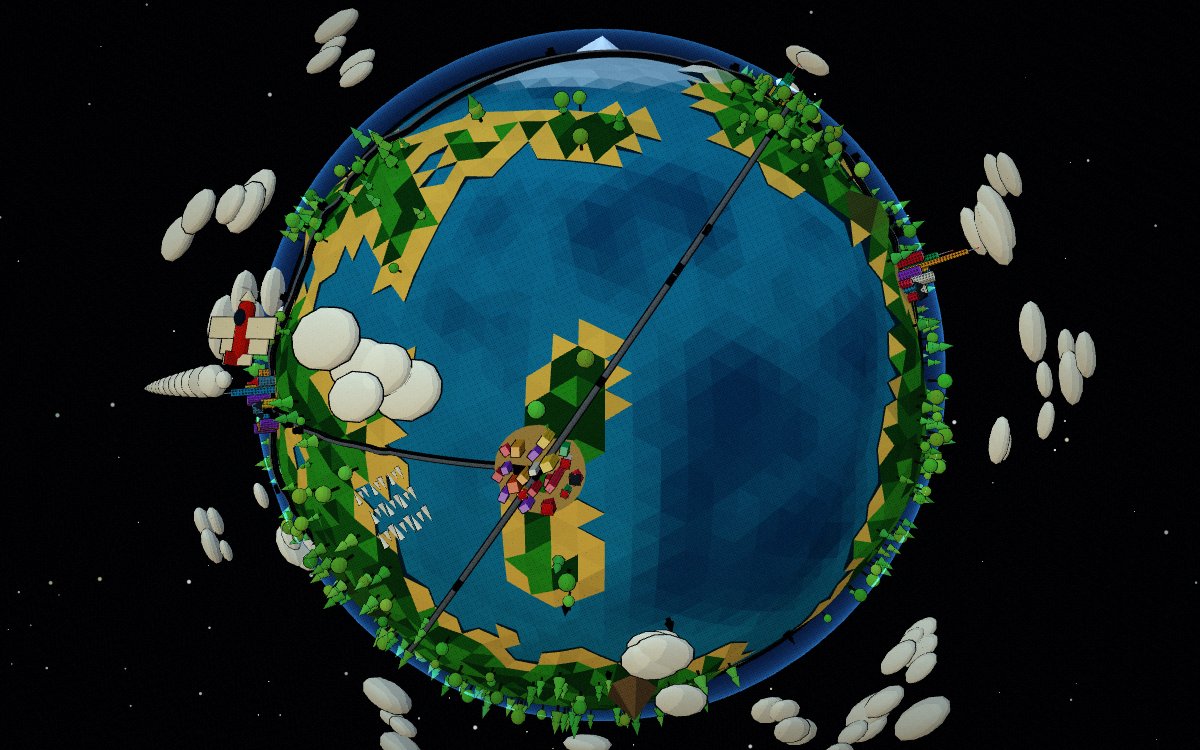
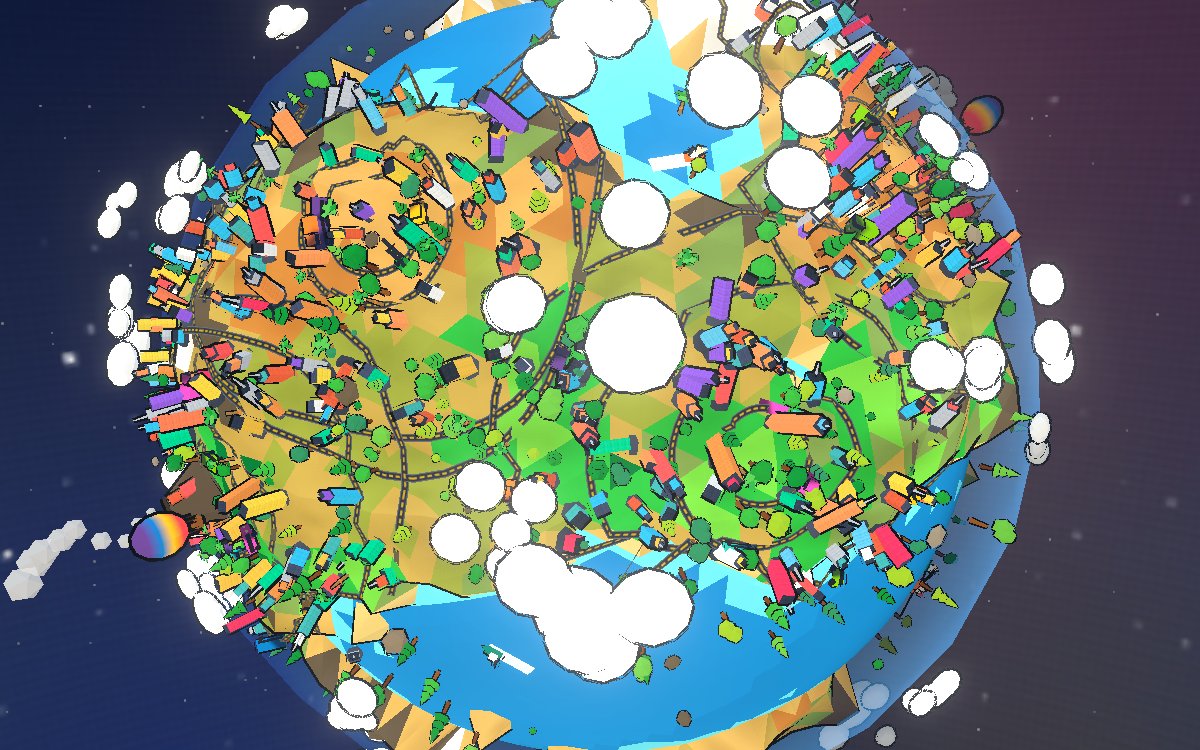
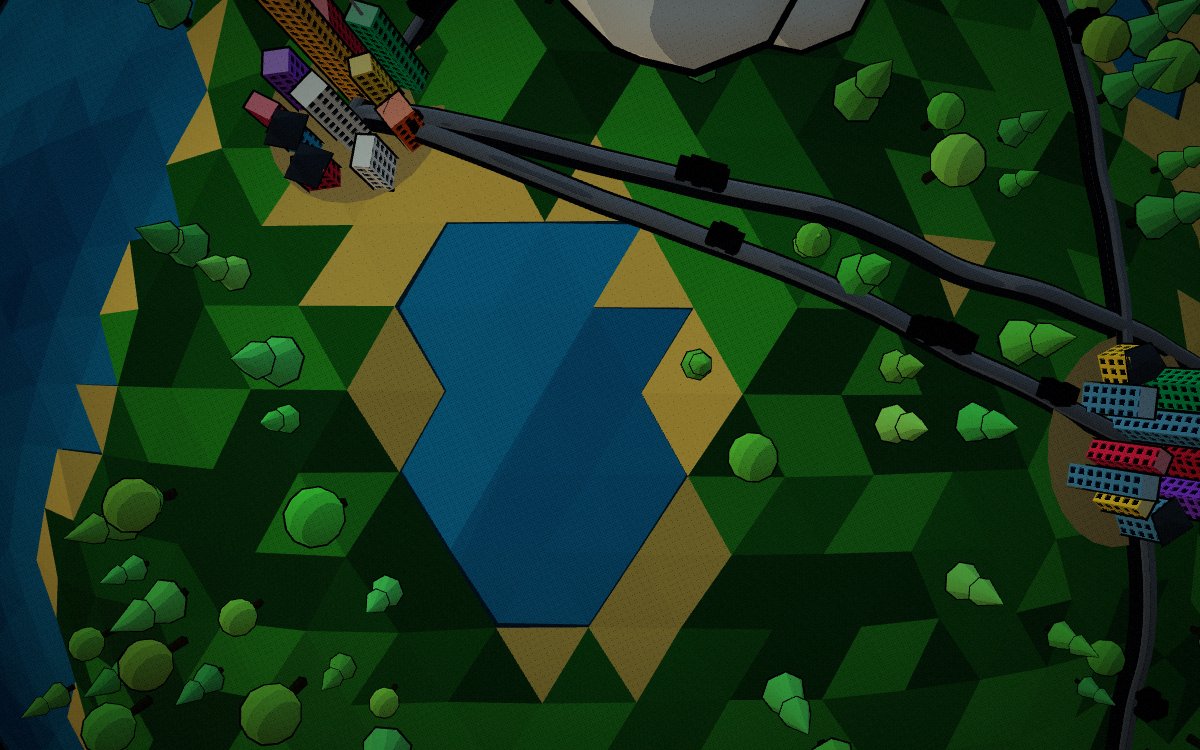
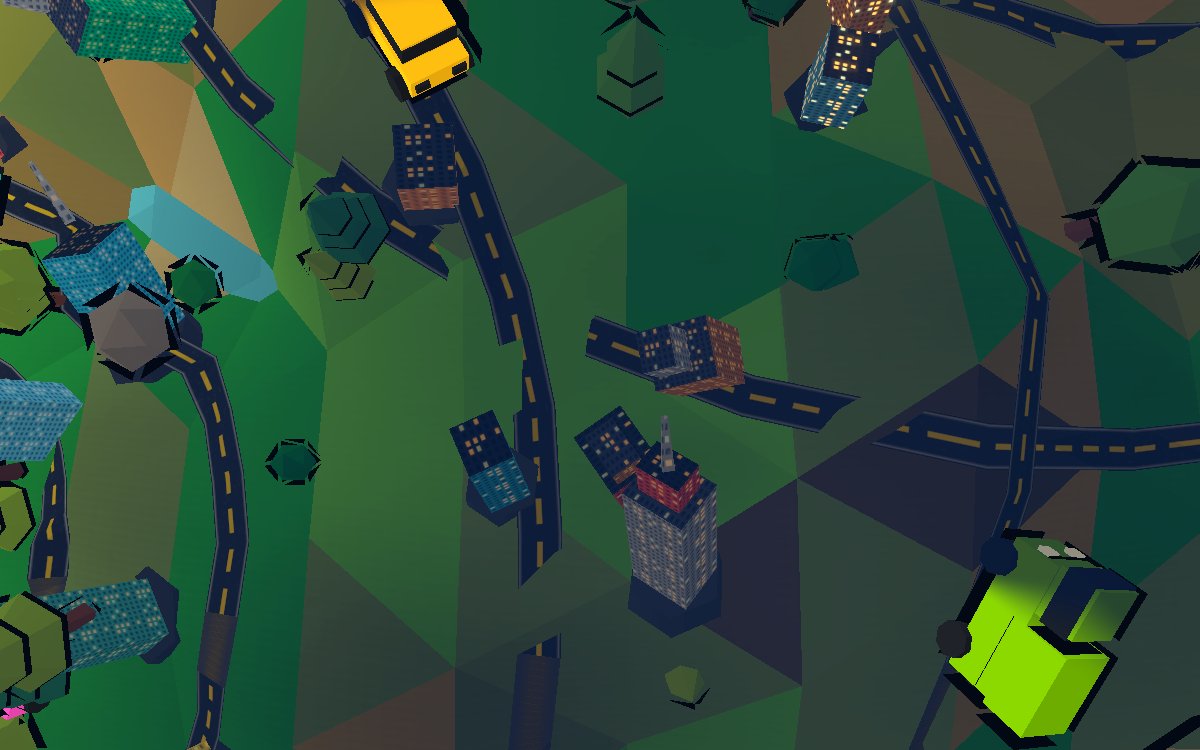
Both models called theirs “Tiny Earth” without being asked. Play them yourself: IQ3_S planet and IQ3_XXS planet. They load Three.js from a CDN and are served exactly as the models left them.
| IQ3_S | IQ3_XXS | |
|---|---|---|
| Cities | 7 | 12 |
| Cars | 72 | 76 |
| Other life | A plane and clouds | 4 planes, 14 ships, 30 clouds, 4 balloons |
| Extras | New World button, sun and wind sliders | Day and night cycle, guided tour, double-click to fly somewhere |
| Triangles, seen from far away | 0.32M | 0.23M |
| Draw calls, seen from far away | 353 | 236 |
Those counts come from each page’s own on-screen stats. Both pages also have a control panel for ink lines and other effects. I took these screenshots in a software-rendered browser, so I’m not quoting frame rates from it.
Against the cloud runs
The cloud numbers come straight from the OhMyUnicorn article. I’m showing them for scale, not as a fair race: those models had the project notes, ran in different agents, and were priced at API rates.
| Model and agent | Build time | Cost | Page size |
|---|---|---|---|
| Gemini 4 Argon, Gemini CLI | 5.5 min | $1.58 | 56 KB |
| GPT-6 Sol | 7.1 min | $0.70 | 24 KB |
| Claude Sonnet 5.5, average of 4 runs | 11.2 min | $1.69 | 28–41 KB |
| Gemini 4 Argon, Antigravity CLI | 12.4 min | $1.45 | 62 KB |
| Claude Opus 5.5, Claude Code | 14.0 min | $2.54 | 48 KB |
| Flash-Next IQ3_S, Pi (mine) | 53.5 min | no API cost | 56 KB |
| Flash-Next IQ3_XXS, Pi (mine) | 102.7 min | no API cost | 82 KB |
Local isn’t quite free. The box draws power for the whole run, and I didn’t measure how much. But every model request stayed on this machine, and I wasn’t paying per token.
What I noticed
- Both finished by themselves. Neither needed a second prompt, and neither left console errors. On a job this open-ended, that’s the result I cared about most.
- Most of the time went to the model. About 75% of each run was waiting for it. Those long waits are the price of running at about 61 tok/s and writing a lot.
- IQ3_XXS wasn’t slower per token. The two ran at the same speed overall, so its extra 49 minutes came from doing more: more turns, more edits and more screenshots. Late in its run it was still working on draw calls and small visual bugs. With one run each, I can’t say if that’s the model or chance.
- Long jobs lean on compaction. Each run filled its context several times, and Pi summarized its history to continue. By the sixth pass in the longer run, the summary alone had reached about 60,000 characters. It held together here, but this is where I’d expect a much longer session to struggle.
- One reply hit the limit. IQ3_XXS ran into the 32,768-token reply limit six minutes in, and carried on.
What this doesn’t show
- One run per model. Models vary from run to run, so none of this ranks IQ3_S against IQ3_XXS.
- Not the same test as the cloud runs. No project notes here, and a different agent. Notes could make a local run shorter or longer, and I haven’t tried it.
- Two server versions. The two runs didn’t use the same Strata release.
- No score. There’s no blind judge and no rubric, same as the original article. Which planet is better is a matter of taste, so play them and decide.